Section Steel Rolling Mill
Turnkey Section Steel Rolling Mill Solutions for Structural Profiles
Structural steel products such as H-beams, I-beams, U-channels, and angles are essential load-bearing components in modern construction, bridges, and industrial plants. Their production involves complex multi-axis deformation and strict control of section geometry, including web thickness, flange dimensions, and overall straightness. In section rolling, factors such as pass design, rolling force distribution, and temperature uniformity play a critical role in determining final product quality. Any imbalance during rolling can lead to dimensional deviation, residual stress, twisting, or uneven mechanical properties, which may affect structural performance and downstream fabrication.
Shanghai Metallurgy Equipment Group (SME) provides complete turnkey section steel rolling mill lines, covering the full process from billet reheating to roughing, intermediate, and finishing rolling, as well as cooling and product handling. Our solutions are designed with optimized roll pass design, robust mill stands, and reliable automation systems to ensure stable rolling conditions and precise dimensional control. By combining proven engineering with efficient process integration, SME section mills deliver accurate geometry, high material yield, and consistent product quality, supporting reliable long-term operation in demanding structural steel production applications.
Section Steel Rolling Process Flow
Billet/Bloom Charging → Reheating Furnace → High‑Pressure Descaling → Breakdown Mill → Universal Rolling Stands → Cooling Bed → Straightening → Cutting → Stacking and Dispatch
Blooms or large billets are heated to the required rolling temperature before entering a breakdown mill for initial shaping. Universal rolling stands, equipped with horizontal and vertical rolls, then precisely form the web and flange simultaneously to achieve the required cross‑section. After rolling, the hot sections are cooled, straightened, and cut to specified lengths before stacking for storage or shipment.
Standard Section Mill Technical Parameters
| Parameter | Typical Range |
| Annual Capacity | 10,000 – 1,500,000 TPA |
| Product Range | H‑beam, I‑beam, U‑channel, L‑angle and custom structural profiles |
| Maximum Web Height | Up to 1000 mm |
| Rolling Method | Universal rolling with horizontal and vertical roll stands |
Mill configurations can be customized based on product mix, required profile size range, and plant layout constraints.
Main Equipment of a Section Steel Rolling Mill
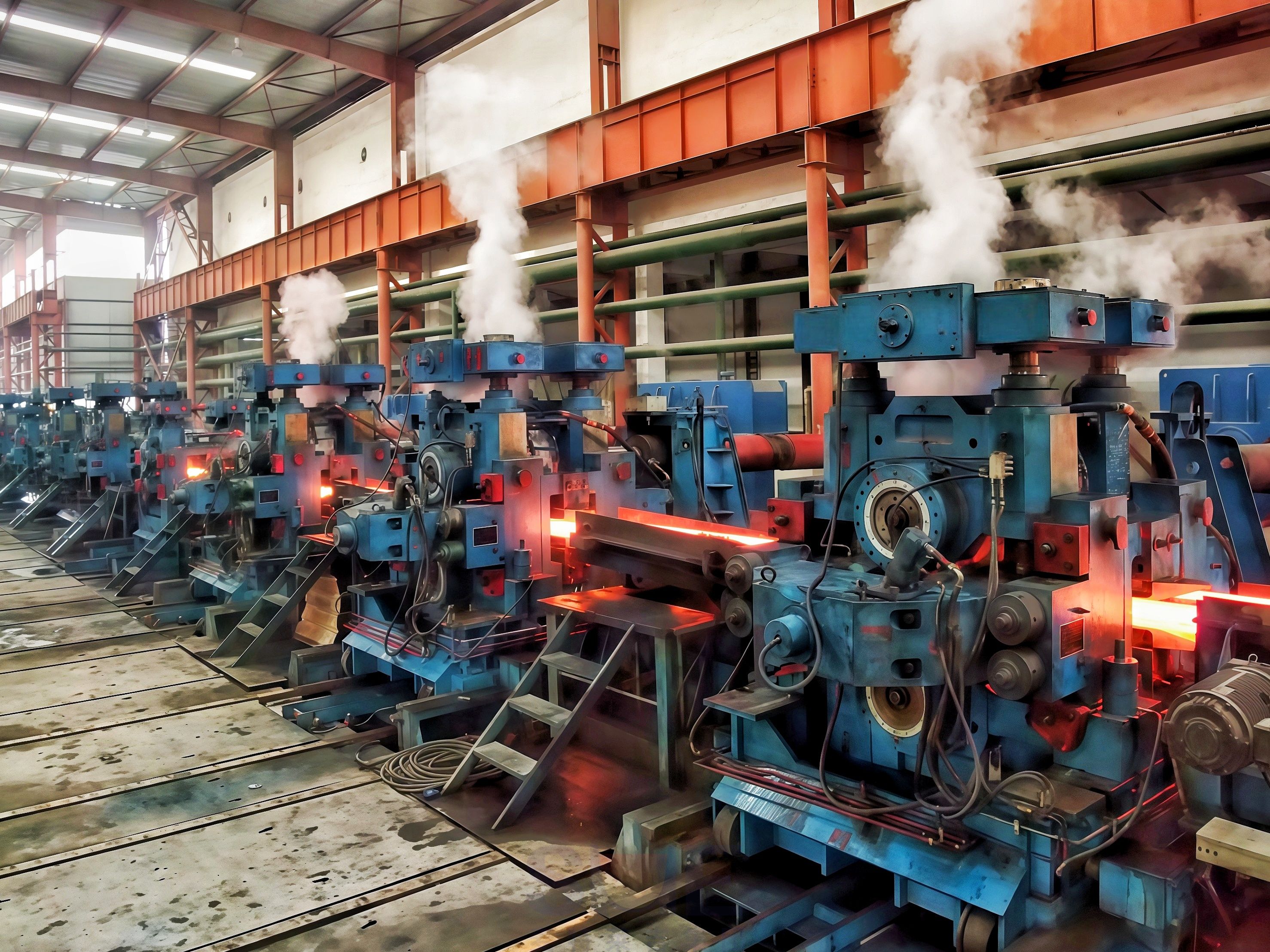
A complete Section Steel Rolling Mill is designed to transform billets or blooms into structural steel profiles such as H-beams, I-beams, angles, channels, and other sections. The coordinated operation of reheating, multi-stand rolling, profile forming, and cooling systems ensures accurate section geometry, stable mechanical properties, and efficient production.
Core equipment includes:
· Billet or bloom reheating furnace with automatic charging, walking beam or pusher mechanism, and multi-zone temperature control
· Breakdown and roughing stands for initial deformation and shape preparation
· Universal and edging mill stands for precise control of web and flange dimensions in H-beam and I-beam production
· Intermediate and finishing stands for final section shaping and dimensional accuracy
· Hot saws and flying shears for cutting sections to required commercial lengths
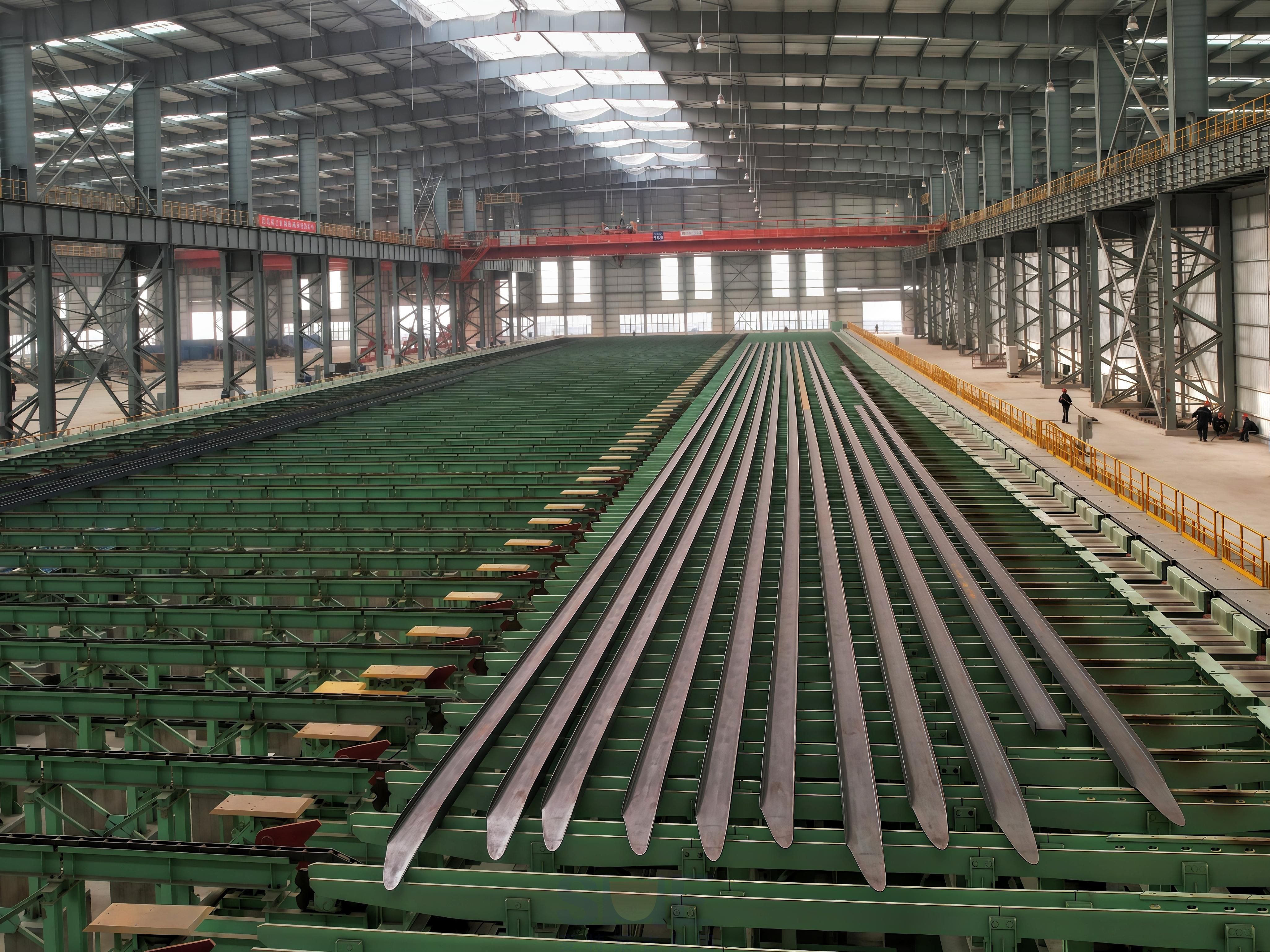
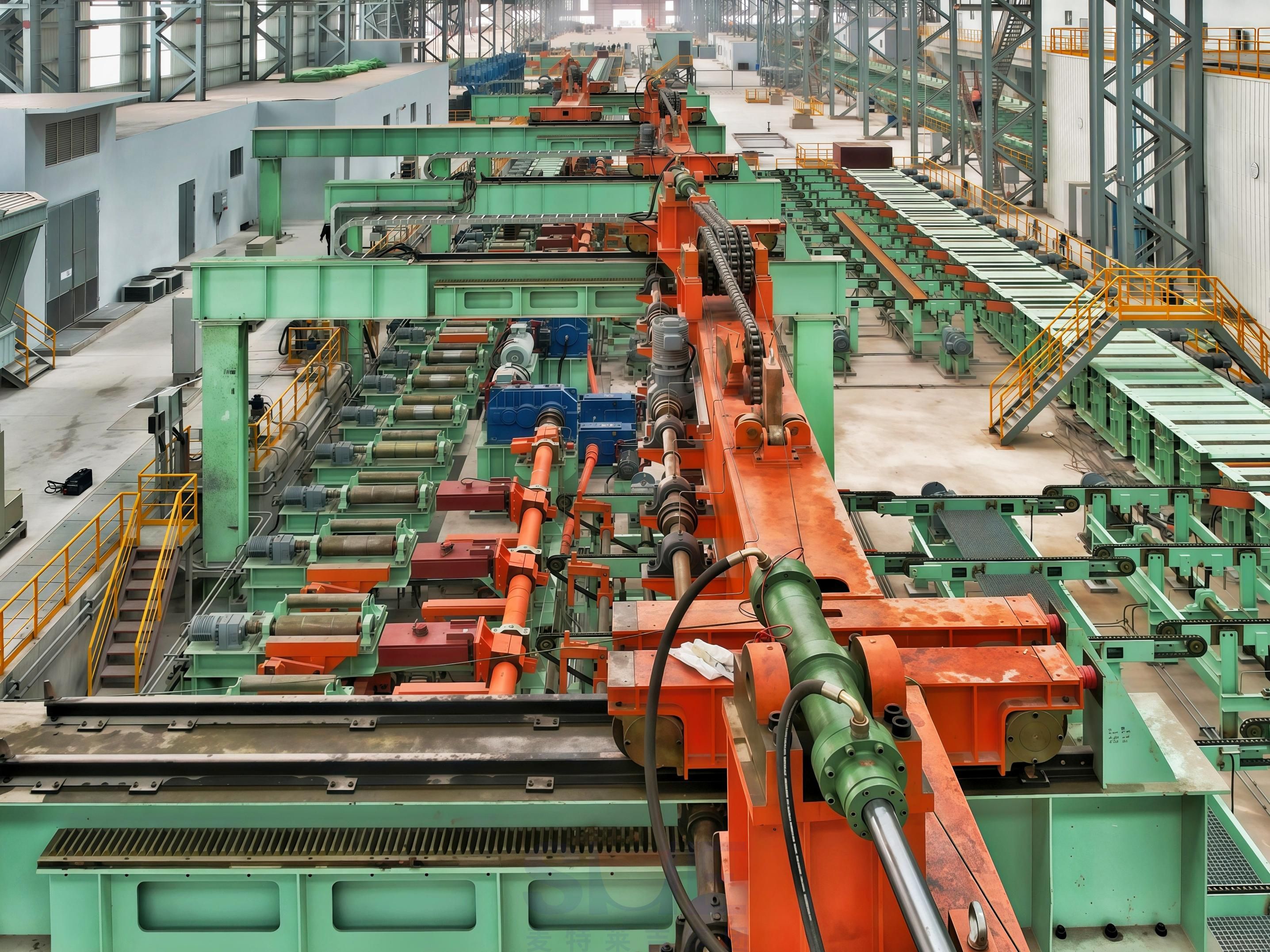
· Run-out roller tables and cooling bed for controlled cooling, straightness, and stress relief
· Straightening machines to correct residual deformation and ensure dimensional compliance
· Automatic stacking, counting, and bundling systems for finished section handling and storage
These systems form the backbone of a modern section steel rolling mill and directly influence profile accuracy, mechanical performance, and production throughput.
Typical Section Steel Rolling Mill Configurations
Different steel producers adopt different mill configurations depending on section size range, production capacity, and target market. The most common layouts are described below.
1. Standard Section Rolling Mill for Medium and Small Profiles
Process route:
Reheating Furnace → Roughing Stands → Finishing Stands → Cooling Bed → Straightening → Stacking
Key features:
· Suitable for angles, channels, and small I-beams
· Covers common section sizes used in construction and fabrication
· Moderate investment and relatively simple mill layout
This configuration is widely used in regional steel plants producing general structural steel products.
2. Universal Section Mill for H-Beams and Wide Flange Profiles
Equipment combination:
Reheating Furnace → Roughing Stands → Universal Mill Stands → Edging Stands → Finishing → Cooling and Straightening
Advantages:
· Precise control of flange thickness and web thickness simultaneously
· Capability to produce wide flange beams and heavy structural sections
· Improved dimensional tolerance and surface quality
This layout is essential for plants targeting large H-beams used in high-rise buildings, bridges, and heavy industrial structures.
3. Section Rolling Mill Integrated with Rail and Heavy Section Production
Process route:
Bloom Reheating Furnace → Heavy Roughing Stands → Universal / Three-High Mills → Cooling → Straightening → Finishing
Suitable for:
· Rail production
· Large structural sections and special heavy profiles
· Steel plants serving railway, shipbuilding, and infrastructure projects
Heavy section mills require stronger stands, higher rolling force, and longer cooling beds to accommodate larger product dimensions.
Why Choose SME Section Steel Rolling Mills?
· Proven universal rolling technology ensuring accurate flange and web dimensions
· Stable rolling force distribution to minimize residual stress and distortion
· Flexible mill configuration supporting a wide range of structural profiles
· Heavy‑duty equipment design for reliable operation with large section sizes
· Complete turnkey supply, including reheating, rolling, finishing, and material handling systems
A well‑designed section steel rolling mill is essential for producing structural profiles that meet strict construction and engineering standards. SME’s turnkey solutions enable steel producers to achieve consistent dimensional accuracy, high mechanical strength, and efficient large‑scale production for infrastructure and industrial projects worldwide.