Rebar Rolling Mill
Turnkey High‑Speed Rebar Rolling Mill Solutions for Construction Steel
Reinforcing bar (rebar) is the most widely used long steel product in global construction, playing a critical role in ensuring the strength and durability of concrete structures. Producing high-quality ribbed bars requires precise rolling tension control, accurate rib formation, and consistent mechanical properties that comply with international standards such as ASTM, BS, and GB. In modern rolling operations, factors such as temperature control, rolling speed synchronization, and quenching performance directly affect product quality, dimensional tolerance, and final microstructure. Any instability in these parameters may result in surface defects, uneven rib geometry, or inconsistent mechanical performance.
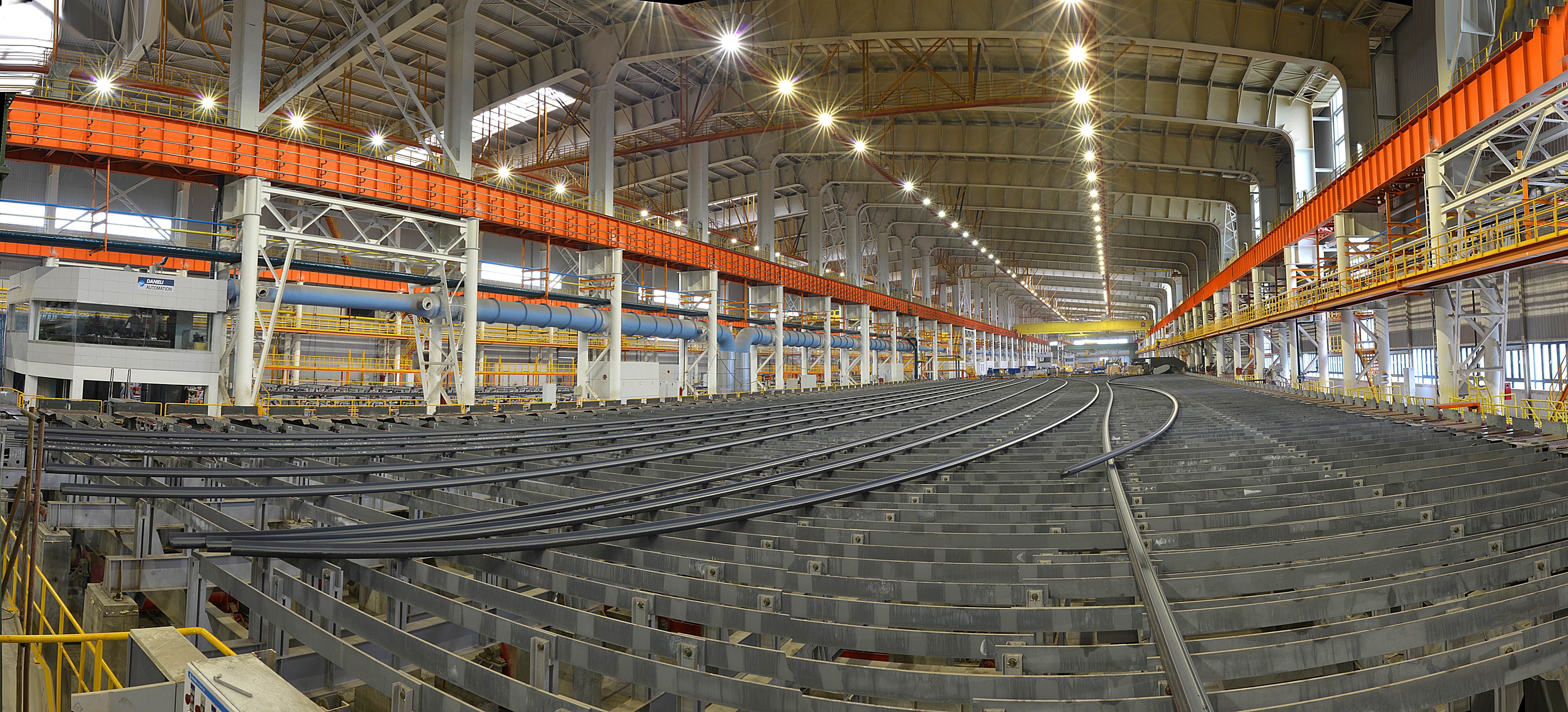
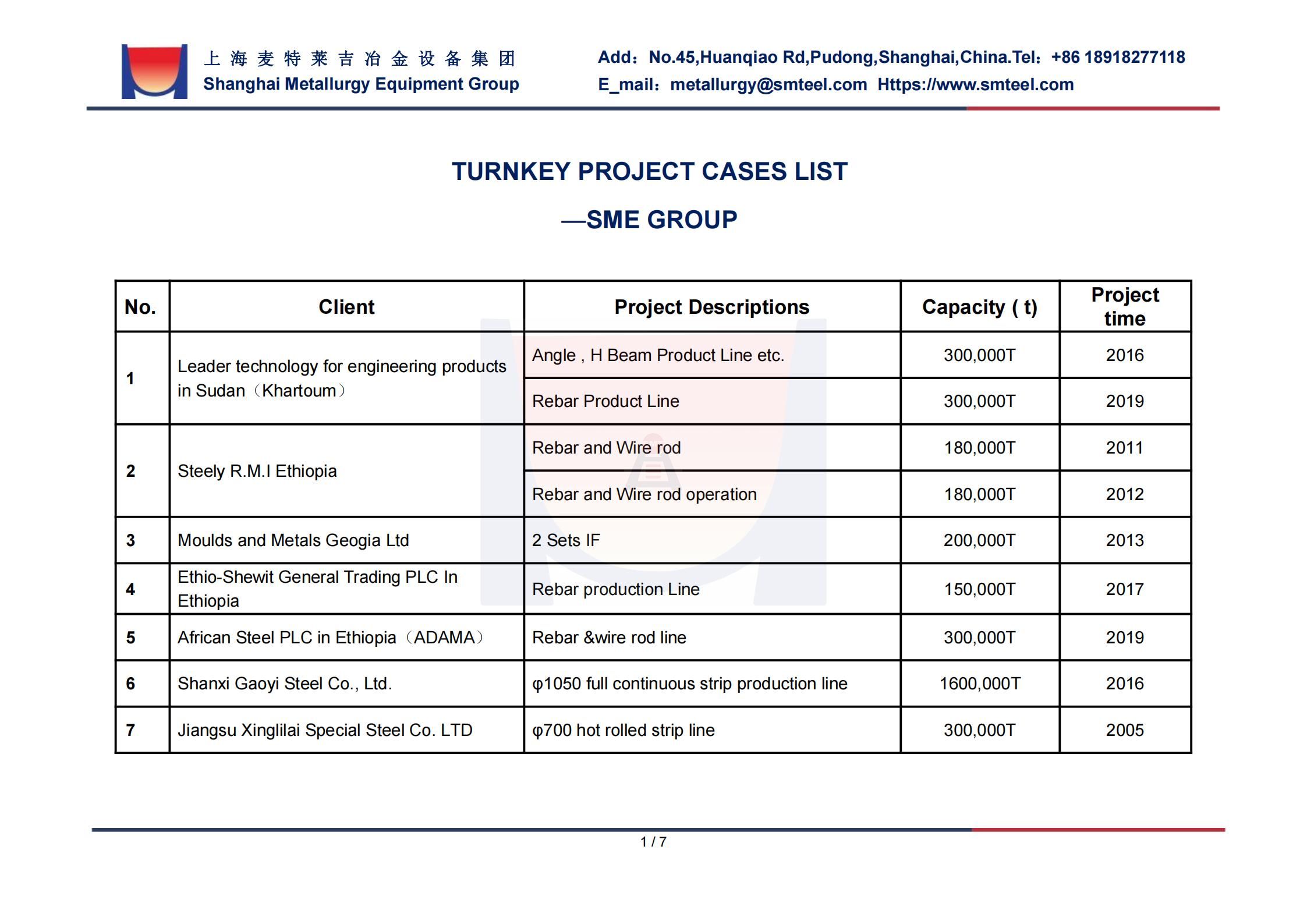
Shanghai Metallurgy Equipment Group (SME) supplies complete turnkey rebar rolling mill lines, from billet reheating to finished bar bundling. Our solutions integrate reheating furnaces, high-speed rolling stands, quenching and self-tempering (TMT) systems, cooling beds, and automated handling equipment to ensure smooth and efficient production flow. Designed with optimized process control and reliable equipment configuration, SME rolling mills deliver stable dimensional accuracy, uniform rib formation, and optimized TMT microstructure. This enables customers to achieve consistent product quality, improved production efficiency, and reliable long-term operation in demanding construction steel applications.
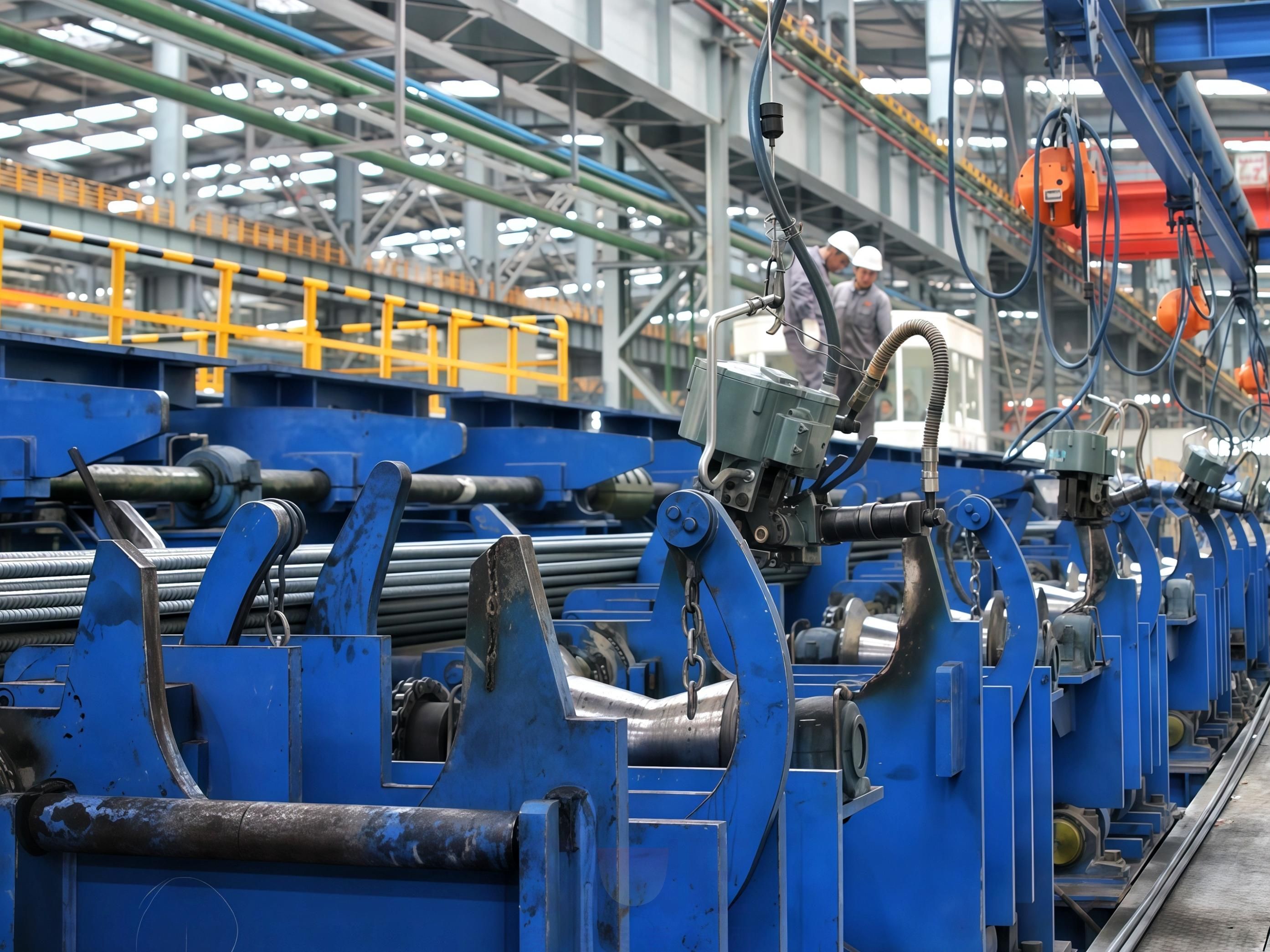
Rebar Rolling Process Flow
Billet Heating → Roughing Mill → Intermediate Rolling → Finishing Block → TMT Quenching System → Cooling Bed → Straightening → Cutting → Bundling and Storage
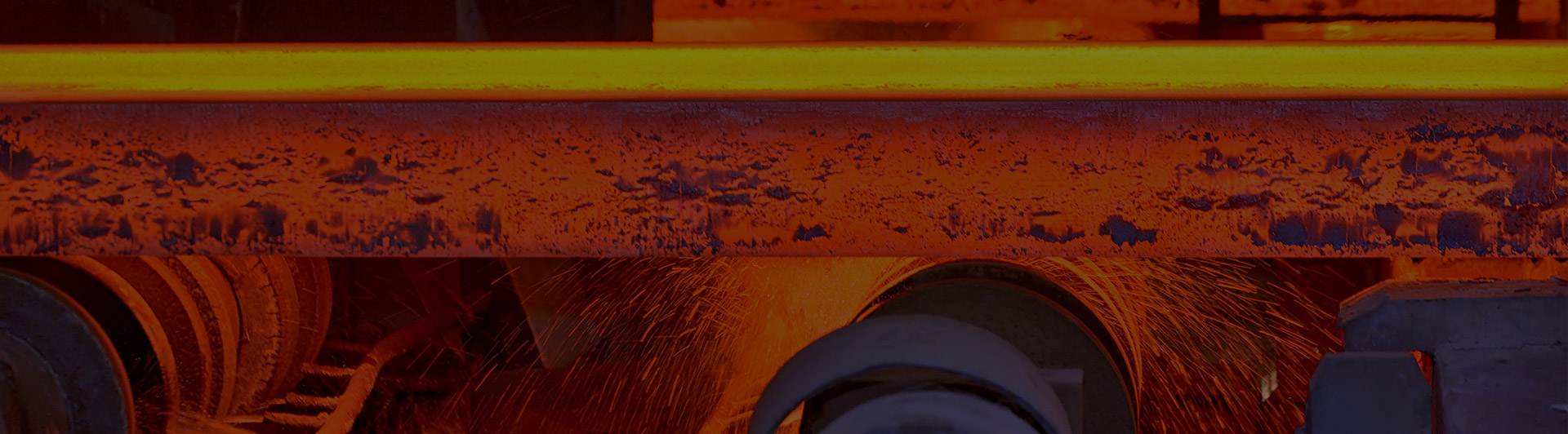
Steel billets are heated in a reheating furnace to the required rolling temperature before entering a series of roughing and intermediate stands that progressively reduce cross‑section. The finishing block forms the final bar diameter and rib pattern. The Thermo‑Mechanical Treatment (TMT) system then applies controlled water quenching to produce a hard martensitic outer layer and a tough, ductile core, ensuring high strength and seismic performance.
Standard Rebar Mill Technical Parameters
| Parameter | Typical Range |
| Annual Capacity | 10,000 – 1,000,000 TPA |
| Finished Product Size | 8 – 40 mm |
| Maximum Rolling Speed | Up to 18 m/s |
| Cooling Technology | Inline TMT water quenching system |
Mill configurations can be customized for low‑, medium‑, or high‑capacity plants depending on regional construction demand and billet supply conditions.
Main Equipment of a Rebar Rolling Mill
A complete Rebar Rolling Mill is designed to transform continuously cast billets into finished reinforcing bars through a sequence of reheating, rolling, quenching, and cooling operations. The coordination of mechanical equipment, thermal systems, and automation ensures stable rolling, accurate bar dimensions, and consistent mechanical properties.
Core equipment includes:
· Billet reheating furnace with automatic charging, walking beam or pusher type, and multi-zone temperature control
· Roughing, intermediate, and finishing mill stands for progressive deformation and final bar sizing
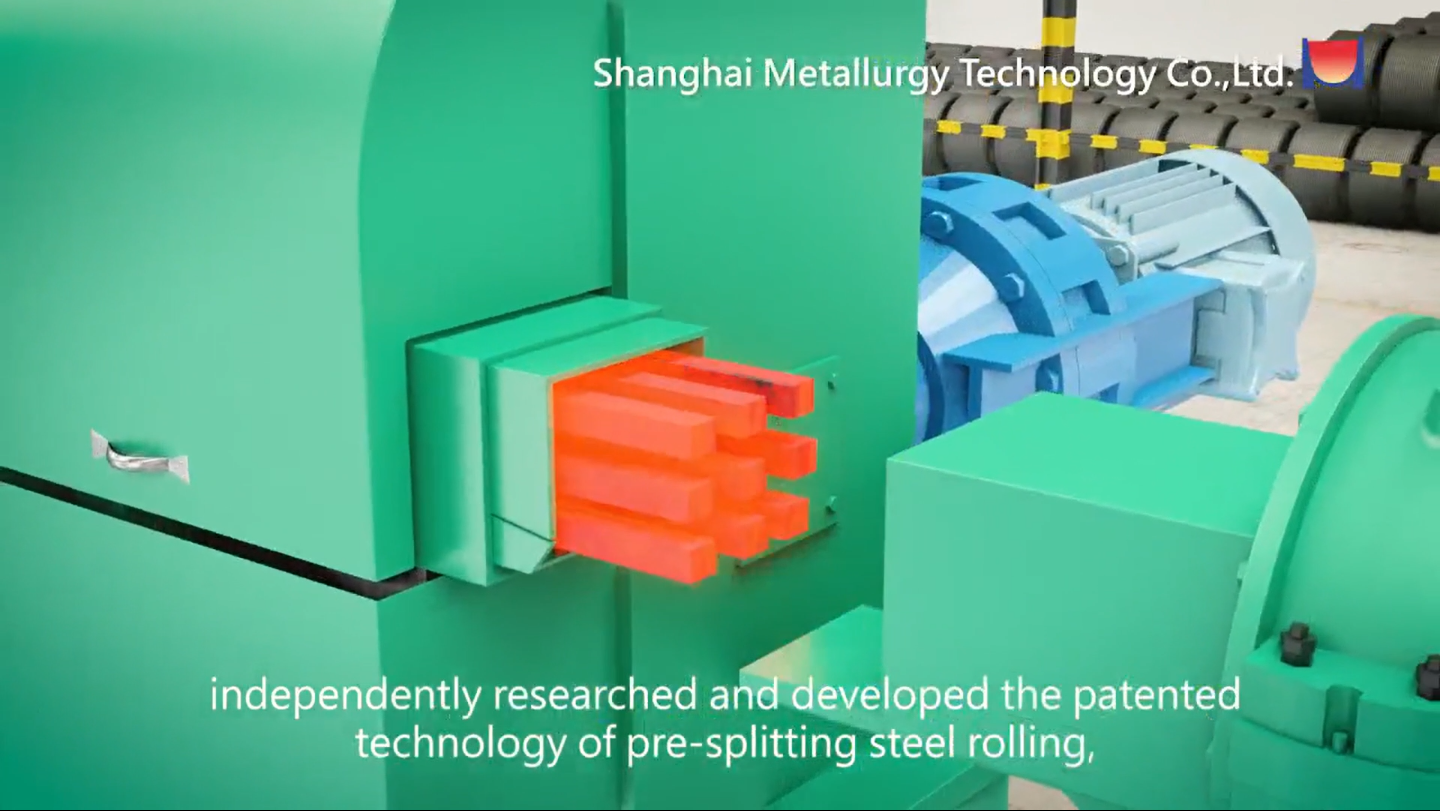
· High-speed finishing block or no-twist mill to achieve precise rib geometry and dimensional tolerance
· Quenching and self-tempering (QST) system or TMT water box for producing high-strength thermo-mechanically treated rebar
· Cooling bed for controlled bar cooling, straightness, and stress relief
· Shearing systems including crop shear, flying shear, and cold shear for cutting bars to required lengths
· Run-out roller tables and bar handling system for transferring bars to cooling and bundling areas
· Automatic bundling, counting, and strapping system for finished product handling and logistics
These systems form the foundation of a modern TMT rebar production line and directly influence rolling speed, bar strength, dimensional accuracy, and production capacity.
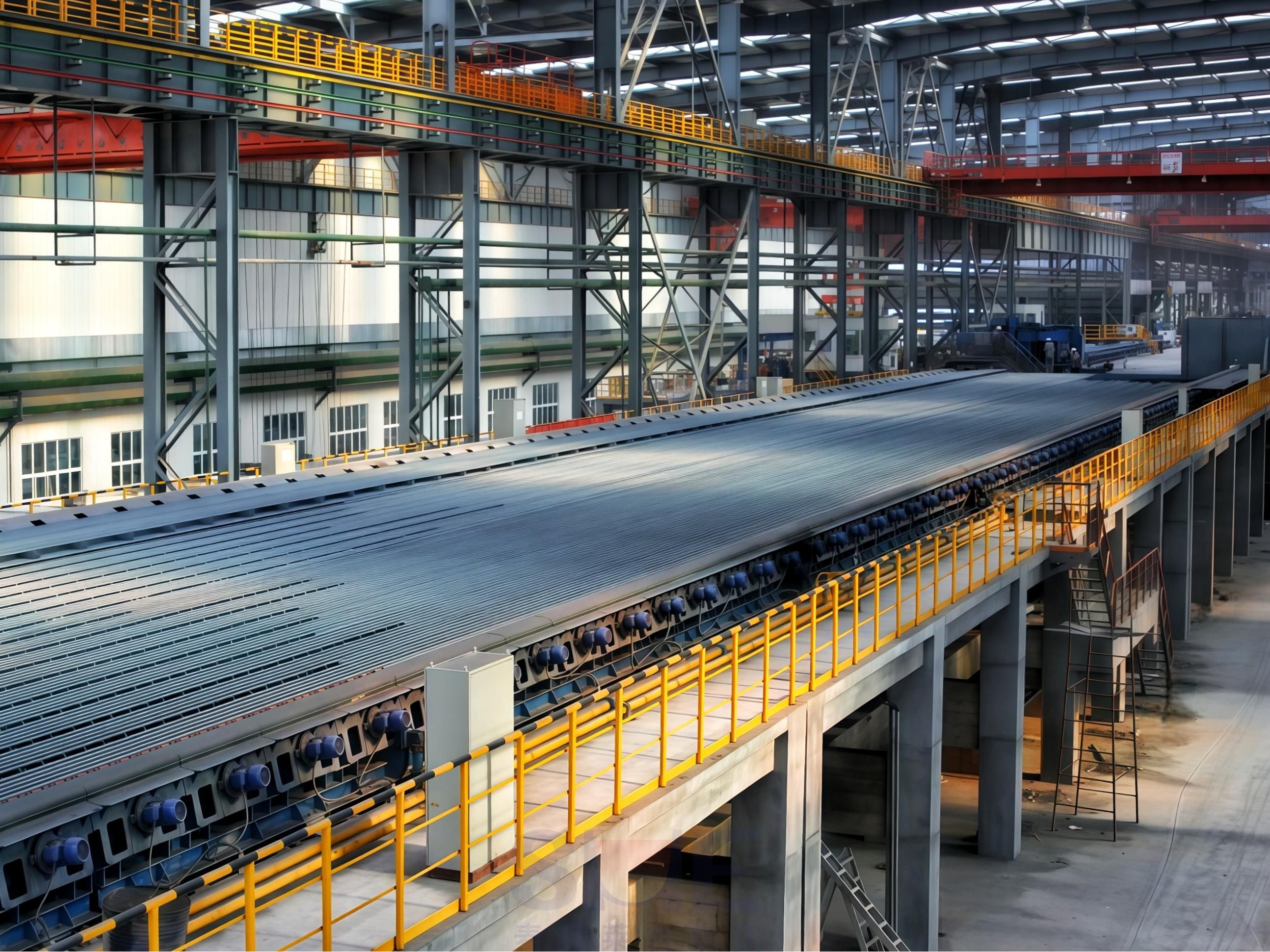
Typical Rebar Rolling Mill Configurations
Different steel plants adopt different rebar mill configurations depending on production capacity, bar diameter range, and automation level. The most common layouts are described below.
1. Standard Rebar Rolling Mill for Construction Steel
Process route:
Billet Reheating Furnace → Rolling Mill → TMT Water Box → Cooling Bed → Bundling
Key features:
· Suitable for producing HRB400, HRB500, and similar construction-grade rebars
· Covers typical diameter range from 8 mm to 40 mm
· Moderate investment and reliable production performance
This configuration is widely used in small and medium-sized steel plants focused on infrastructure and general construction markets.
2. High-Speed Rebar Rolling Mill with No-Twist Finishing Block
Equipment combination:
Reheating Furnace → Roughing & Intermediate Stands → No-Twist Finishing Block → TMT System → Cooling Bed
Advantages:
· Higher rolling speed and increased hourly output
· Improved dimensional accuracy and rib geometry
· Better surface quality due to reduced torsional stress in finishing stands
This layout is suitable for plants targeting large-scale production and tighter dimensional tolerances.
3. Rebar Rolling Mill Integrated with Bar and Wire Rod Production
Process route:
Reheating Furnace → Multi-Stand Rolling Mill → Switchable Finishing Line → Rebar Line / Wire Rod Line
Suitable for:
· Steel plants requiring flexible production between rebar, bar, and wire rod
· Producers aiming to maximize equipment utilization and market adaptability
Such combined mills allow operators to switch between product types based on market demand while sharing upstream equipment like reheating furnaces and roughing stands.
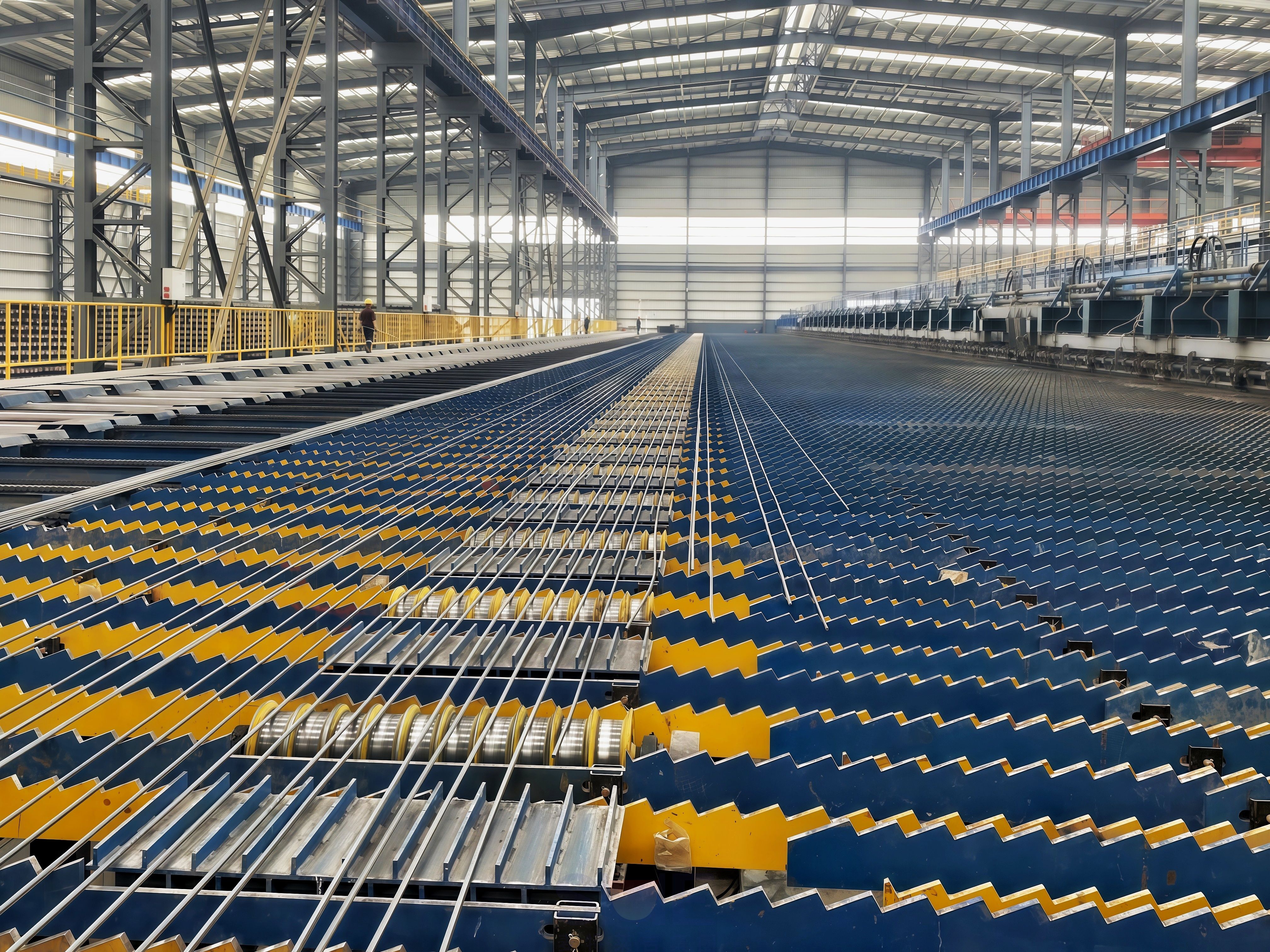
Why Choose SME Rebar Rolling Mills?
· Stable rolling tension control for consistent bar dimensions and rib geometry
· Optimized TMT technology for high‑strength and earthquake‑resistant rebar
· High‑speed finishing block enabling increased mill productivity
· Modular mill layout supporting future capacity expansion
· Complete turnkey supply, including reheating furnace, rolling line, and finishing equipment
A reliable rebar rolling mill is essential for producing reinforcement steel that meets strict construction and safety standards. SME’s turnkey rolling solutions help steel producers achieve lower production cost per ton, consistent product quality, and long‑term operational stability in competitive construction steel markets.